



MAXHUB is shaping the next generation of smart classrooms

As digital transformation shifts from an ambitious ideal to an urgent baseline in global education, interactive technology is no longer a novelty in the classroom. It has become essential infrastructure. Leading this transition, MAXHUB is consolidating its position as a primary architect of integrated learning technology, replacing traditional teaching setups with intelligent, highly collaborative environments.
Beyond the Chalkboard
For decades, blackboards, chalk, and textbooks have remained familiar tools in the classroom. However, the changing ways in which Gen Z and Gen Alpha access and engage with information are creating new demands for teaching and learning. As a result, digital transformation in education in Vietnam is increasingly focused on modernising teaching methods, putting learners at the centre, and bringing digital technology into the classroom to enhance visual learning, interaction, and overall learning outcomes.
Achieving this shift requires more than piecemeal hardware upgrades. Equipping classrooms with low-resolution projectors, standard consumer televisions, or cumbersome interactive boards often creates technical friction rather than educational value. Forward-thinking institution leaders now seek unified, “all-in-one” solutions: streamlined hardware ecosystems that reduce operational overhead while delivering high-impact pedagogical tools.
The Core of the Smart Classroom: MAXHUB Interactive Flat Panels

Designed specifically for academic environments, the MAXHUB Interactive Flat Panel (IFP) functions as the central nerve center of the modern classroom. Featuring crisp 4K resolution, anti-glare coatings and TÜV Rheinland-certified blue light filtering, these displays protect student eye health during extended learning sessions without compromising visual clarity.
The defining strength of MAXHUB hardware lies in its tactile responsiveness. Supporting up to 40 simultaneous touch points, the panels allow teachers and multiple students to write, draw, and solve complex problems on the same surface at the same time. Features such as intuitive palm rejection and real-time handwriting-to-text conversion keep classroom discussions fluid, removing technical delays from the flow of instruction. By maintaining uninterrupted communication between educator and student, technology enhances human interaction rather than replacing it. Dual operating system capability (Android and Windows) further grants immediate access to rich academic resources and interactive simulations for mathematics, physics, chemistry, and biology without requiring external computers.
Software Ecosystems that Empower Educators
Educational technology yields real value only when it simplifies instruction and frees educators from administrative burden. Leveraging specialized software such as MAXHUB ClassPro and Bytello, teachers can transform traditional lesson plans into immersive, multi-dimensional experiences. Complex concepts come alive through embedded 3D models, dynamic video content, and real-time formative quizzes. One-touch wireless screen sharing from personal tablets or laptops encourages immediate peer collaboration and active group discussions.
Furthermore, the software automatically captures the entire lesson arc, including live annotations and dynamic notes, packaging them into downloadable PDF files accessible via a single QR code scan. Students no longer need to spend critical class time frantically copying notes from a board. Instead, they can focus entirely on analytical thinking and real-time comprehension, knowing their study materials are preserved for home review.
Hybrid Learning – Educational Equity
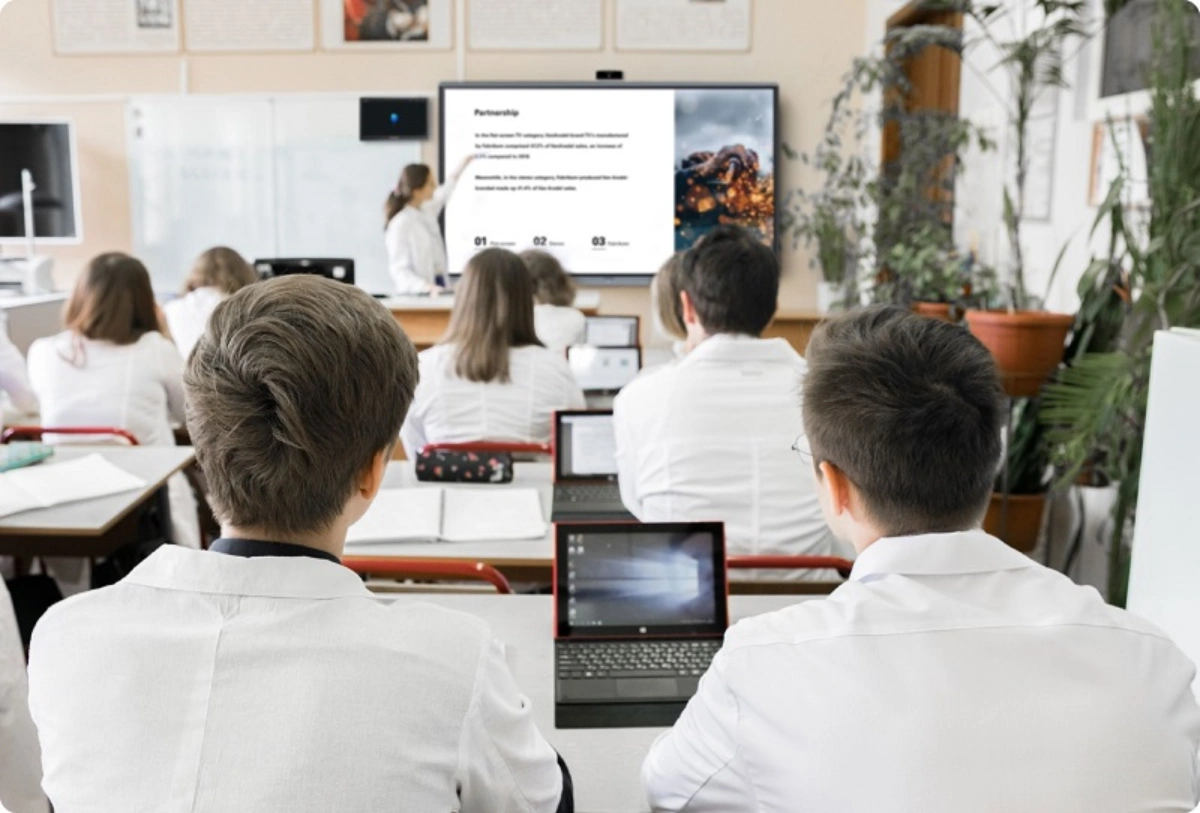
Bridging geographical divides through hybrid learning represents another cornerstone of MAXHUB’s design architecture. Integrated wide-angle 4K cameras, multi-directional microphone arrays, and artificial intelligence noise reduction turn any physical classroom into an active broadcast hub.
This infrastructure extends far beyond emergency remote learning; it provides a viable mechanism for educational equity. Classrooms in remote or underserved areas can seamlessly connect with expert guest educators and urban institutions in real time. Students everywhere gain equal access to shared digital whiteboards, participating in identical learning opportunities regardless of physical location. In an era marked by rapid digital restructuring, democratizing access to quality instruction remains an essential goal.
A Sustainable Investment in the Future of Learning
Across primary schools, universities, and specialized academic institutions, the implementation of MAXHUB solutions shows measurable returns: higher classroom engagement, clearer conceptual retention, and significantly reduced lesson preparation times for faculty. Investing in integrated hardware and software ecosystems represents a long-term strategy for institutions seeking international standards of operational efficiency.
At the upcoming International Education Conference and EdTech Exhibition (IECEE 2026), MAXHUB will showcase its complete suite of next-generation smart classroom solutions. The event provides an opportunity for academic leaders, policymakers, and educators to experience these integrated environments firsthand. Through this presence, MAXHUB reaffirms its long-term commitment to advancing digital transformation and building equitable, technology-enabled learning ecosystems across the region.