



The Global Digital Education Story: How Technology Is Transforming the Way the World Learns

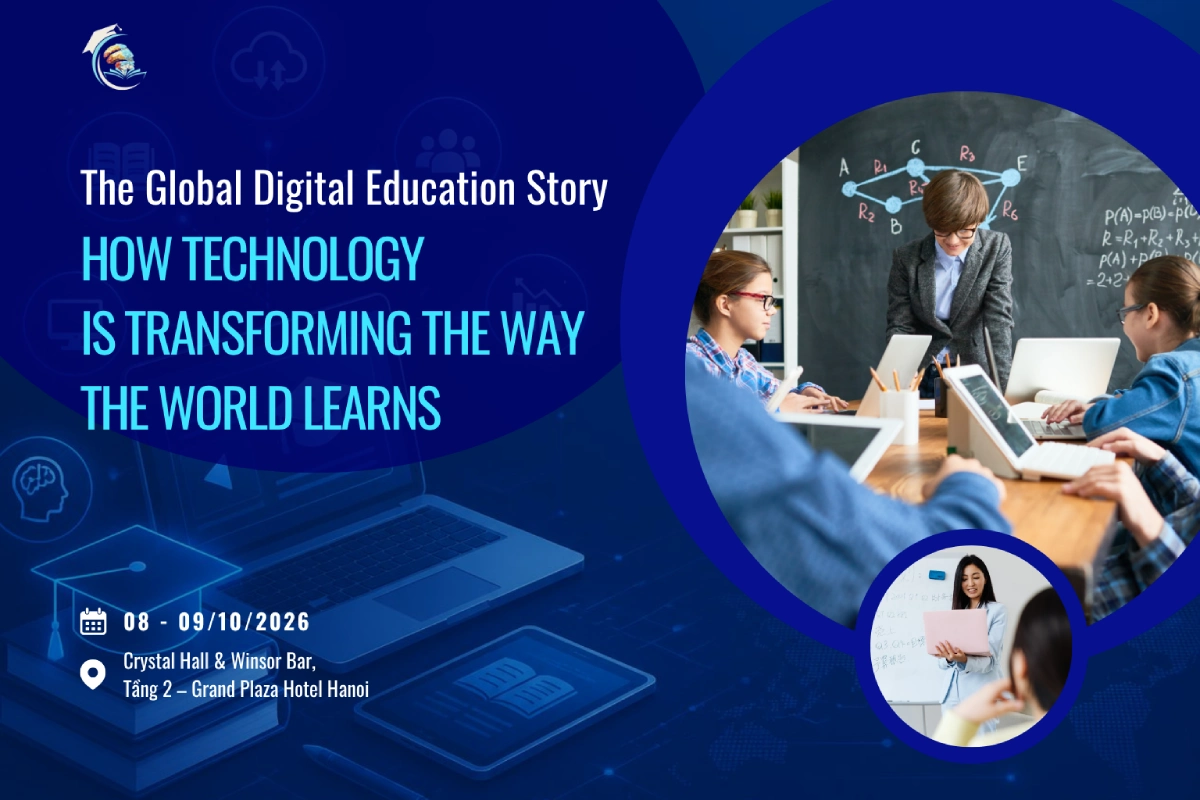
Global digital education is entering a period of profound transformation. AI, data, and EdTech are reshaping how knowledge is created, shared, and accessed, while enabling learning models that are more flexible, personalised, and connected.
Yet the digital education story is about more than technology. At the heart of every innovation lies a broader question of access, opportunity, and how to keep people at the centre of education as we shape the future of learning.
How Is Digital Education Changing Globally?
If digital education was once primarily understood as putting learning materials online or delivering classes remotely, its scope has now expanded far beyond that.
AI, data, cloud computing, virtual reality (VR), augmented reality (AR), EdTech platforms, and smart classroom technologies are all contributing to the transformation of education.
- Learners can access knowledge anytime, across multiple devices and through a variety of learning approaches.
- Educators have more tools to design lessons, develop learning resources, and provide targeted support for different groups of learners.
- Educational institutions can use data to gain deeper insights into learning processes and make more informed decisions.
As a result, digital education is gradually moving from simply “bringing technology into education” towards “redesigning the educational experience through technology.”

AI Is Opening a New Chapter for Education
In recent years, AI has emerged as one of the most prominent forces shaping global education.
Learners can use AI to ask questions, search for and organise information, practise skills, and receive feedback. Educators can apply AI to develop learning resources, design learning activities, and support a range of professional tasks.
AI is also evolving far beyond chatbots. AI tutors, teaching assistants, personalised learning tools, and AI-powered assessment platforms are being developed and adopted across markets worldwide.
Companies and organisations such as Google, Khan Academy, Meta, Efekta, and ELSA are demonstrating different approaches to applying AI and enhancing the learning experience.
But this is only one part of a much bigger picture.
The key question is no longer simply what AI can do, but how education will evolve as AI becomes an increasingly integrated part of the learning experience.
Personalised Learning Through Digital Education
One of the most promising benefits of educational technology is its ability to personalise the learning experience.
In a traditional classroom, a group of students often follows the same content and pace. With data and AI, digital systems can help identify differences in each learner’s abilities, progress, and individual needs.
As a result, learners can benefit from:
- Content better suited to their level
- Exercises and resources tailored to their needs
- Faster feedback
- Early support when they encounter difficulties
- More flexible learning pathways
Models like these are being explored and developed in different forms around the world.
Importantly, personalisation does not necessarily mean that every learner follows a completely different curriculum. Technology can simply give learners more choices and help ensure they receive the right support at the right time.
Digital Education Is Turning Classrooms into Connected Learning Spaces
Digital education is also transforming the learning environment itself. Interactive whiteboards, collaborative displays, recording systems, online connectivity platforms, and smart devices are making classrooms more flexible and connected.
MAXHUB is one example in the field of classroom and collaboration solutions, while many other technology companies are developing their own approaches to smart classrooms, hybrid learning, and collaborative learning.
At another level, technologies such as VR, AR, and XR are creating new opportunities for learners to experience simulated environments, from laboratories to hands-on training scenarios.
This is particularly significant in fields where practical experience plays a critical role, such as healthcare, engineering, science, and vocational education.
Technologies Shaping the Classroom of the Future
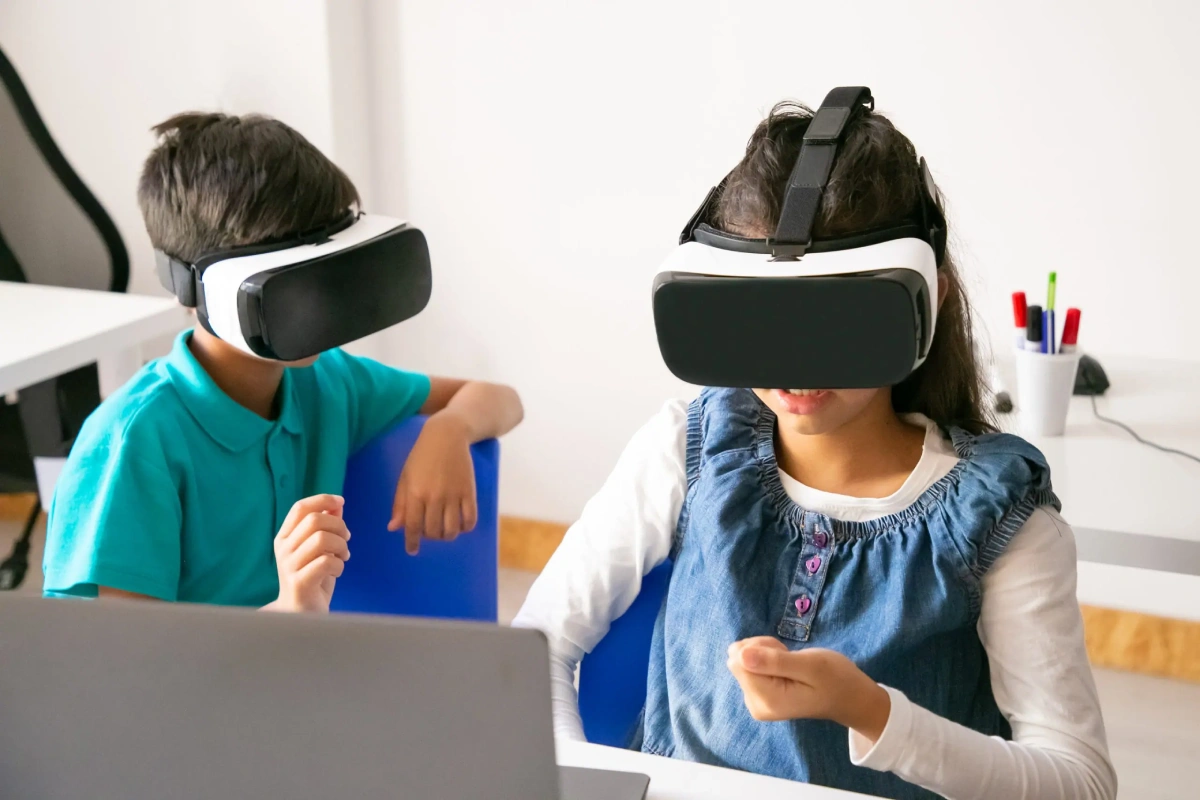
Beyond AI, a range of other technologies is expanding the possibilities of the learning environment.
- Blended Learning: Combining face-to-face and online learning gives learners greater flexibility in when and where they study, as well as how they access learning resources.
- VR and AR: Virtual and augmented reality allow students to experience simulated environments rather than relying solely on theoretical instruction. These technologies have significant potential in healthcare, engineering, science, and vocational education.
- EdTech Platforms: Digital learning platforms are increasingly integrating a wide range of functions, from course management and interaction to assessment and learning analytics.
- Data-Driven Management: At the institutional level, data can connect activities across admissions, teaching and learning, research, and student services, helping universities move from manual processes towards data-driven decision-making.
The Technology Infrastructure Behind Digital Education
A modern digital education system requires not only applications and platforms, but also the technology infrastructure that powers them.
AI, cloud computing, 5G/6G connectivity, robotics, and XR are expanding the possibilities for implementing new models of education and learning.
Qualcomm is one of the companies operating at this foundational technology level, with programmes and platforms related to AI, XR, robotics, and connectivity for higher education environments.
This highlights an important reality: the future of global digital education will be shaped by multiple layers of technology – from underlying infrastructure and platforms to applications designed directly for learners and educators.
Global Digital Education Trends in the Years Ahead
The changes already underway point to several key trends that are likely to shape the future of digital education:
- AI and digital tutors will continue to evolve, supporting learners and educators across a wide range of activities.
- Personalised learning will be increasingly driven by AI and data, enabling more tailored learning experiences.
- Smart classrooms will connect physical learning environments with digital spaces.
- VR, AR, and XR will expand opportunities for simulation and hands-on learning.
- Educational data will play an increasingly important role in institutional management and decision-making.
- EdTech will continue to evolve, encompassing everything from learning platforms to assessment tools and teaching support solutions.
More importantly, these trends will become increasingly interconnected, contributing to the development of a broader and more integrated digital education ecosystem.
The Global Digital Education Story Comes Together at IECEE 2026
These trends are being explored and tested across countries by universities, education organisations, and technology companies with diverse areas of expertise.
This is the context in which IECEE 2026 – the International Conference on Education Cooperation in the Digital Era & The Education & EdTech Exhibition — brings these different perspectives together.
Taking place on 8-9 October 2026 at the Grand Plaza Hotel Hanoi, IECEE 2026 is expected to welcome more than 2.000 delegates, representatives from 40+ countries, 50+ organisations, and 70+ booths.
The event will bring together policymakers, universities, international education organisations, technology companies, EdTech providers, and experts from across the education ecosystem.
The participating ecosystem includes prominent names such as Nguyen Hoang Group, ETS, BUV, Efekta, Pearson, Qualcomm, MAXHUB, Meta, Google, Khan Academy, and ELSA, among many others.
Each organisation represents a different dimension of digital education – from AI and foundational technologies to smart classrooms, personalised learning, language education, EdTech, and learner support solutions. It is this diversity that gives an international platform its value: not a single technology, but a range of perspectives coming together to shape a broader vision for the future of education.